500 Faux Embroidery Patchwork Bundle Review
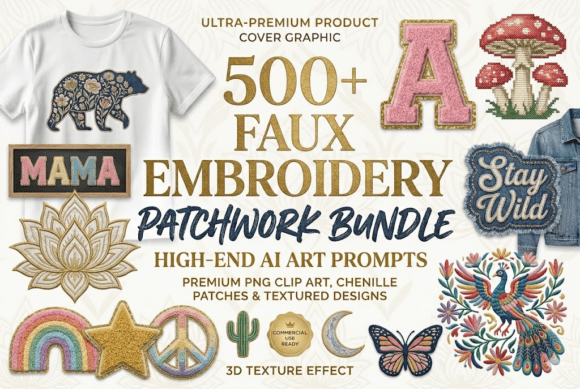
As a designer who has spent years navigating the intersection of digital art and physical thread, I approach new design assets with a critical eye. The market is flooded with generic patterns, but when I stumbled upon the 500 Faux Embroidery Patchwork Bundle, my interest was piqued by its promise of a 3D texture experience. This isn't just another pack of flat vector graphics; it is a collection of high-end AI prompts designed to generate realistic faux embroidery and chenille patch effects. Before integrating this into my workflow for client projects or my own Etsy shop, I needed to understand how these Illustrations translate from a screen into a tangible, stitched reality.
The First Impression: Texture Without the Thread
Opening the bundle, the immediate visual impact is the depth. Unlike standard machine embroidery design files that rely on stitch direction to create shading, these Graphics simulate the look of dense fill stitch and raised satin stitch through lighting and shadow manipulation. The mood is distinctly tactile. It feels like looking at a close-up of a vintage denim jacket or a high-end boutique sweatshirt. For a crafter looking to sell handmade product mockups without sewing a single inch, this is a game-changer. The layout of the designs suggests they are built for versatility, ranging from bold statement pieces to subtle decorative accents.
However, as a reviewer, I must ask: does this hold up under scrutiny? When I pulled a few designs into my preferred software to visualize them on a tote bag design, the illusion held strong. The simulated thread pile looked convincing enough that a customer scrolling through an online store would assume it was a real embroidered patch. This level of detail is crucial for Etsy seller profiles where photography can be expensive and time-consuming.
Real-World Application: From Digital to Physical
Let's talk about a specific scenario. Imagine you are preparing a line of custom holiday gifts for a small business client. They want personalized aprons and kitchen towels featuring a rustic, cozy aesthetic. Using the 500 Faux Embroidery Patchwork Bundle, I could quickly generate a dozen variations of a "Baker" badge or a festive wreath that looks like it has been stitched with heavy-duty thread. By placing these generated images onto a printable mockup, I presented the client with a professional preview that felt authentic.
In the context of custom apparel, such as sweatshirt embroidery, these designs excel at showing how a logo might sit on fabric. The way the bundle handles the simulation of chenille patch textures is particularly impressive for sports teams or school spirit gear. It captures that fuzzy, raised look that makes people want to touch the garment. If you are a small shop owner trying to decide between ordering actual patches or printing a design, these visuals help you gauge the perceived value before committing to production costs.
For those creating digital embroidery file previews, this bundle is invaluable. Instead of spending hours stitching out samples to photograph, you can use these assets to create high-resolution renders. This speeds up the workflow for commercial embroidery projects significantly. Whether you are designing baby embroidery items that need to look soft and gentle, or rugged outdoor gear, the ability to tweak the AI prompts within this bundle allows for customization that fits the brand identity perfectly.
Navigating Limitations and Design Pitfalls
While the visual potential is high, practical judgment is required. There are scenarios where relying solely on these faux designs can lead to disappointment if not managed correctly. For instance, if you plan to use these visuals to sell a physical finished product that claims to be embroidered, ensure your actual stitching matches the density shown in the graphic. Real thread behaves differently than pixels. A design that looks great as a faux embroidery image might have too much stitch density for a delicate hoop size on thin fabric.
Be cautious when applying these concepts to textured fabrics like linen or heavy canvas in your final photos. The contrast between the smooth digital rendering and the rough fabric grain can sometimes break the illusion. Similarly, on dark fabrics, the simulated highlights in the bundle might appear too bright compared to real metallic or variegated thread colors. Always test your mockups against the actual background color you intend to use.
Another area for caution is detailed corners and tiny lettering. In a real machine embroidery design, very small text often gets lost or becomes illegible due to the thickness of the thread. The 500 Faux Embroidery Patchwork Bundle can render crisp, tiny details easily because it is not bound by physical limitations. If you use these visuals to sell a product with fine print, verify that your actual embroidery machine can reproduce it. Misleading customers with a perfect digital render that cannot be physically achieved damages customer trust and hurts your reputation as a professional maker.
Practical Designer Notes for Success
To get the most out of this bundle, I recommend a disciplined approach. First, always test the design concept on scrap fabric first if you are moving from digital to physical. Even if you are just using the bundle for marketing, print a sample to see how the colors translate. Check the thread color contrast carefully; what looks vibrant on a monitor might wash out in print.
Review the stitch density implied by the design. If the image shows a very tight, solid fill, remember that real embroidery requires proper stabilizer to prevent puckering. Confirm your hoop size can accommodate the design without distortion. Inspect small details closely; sometimes the AI generates artifacts that look like thread but aren't quite right. Test your mockups in black and white to ensure the design has enough contrast to stand out even without color.
Compare light and dark fabric backgrounds to see how the shadows in the faux embroidery interact with the material. Use proper stabilizers in your physical work to match the rigidity shown in the digital art. Most importantly, check whether the design works for both personal and commercial projects. Since this bundle consists of AI prompts and generated graphics, confirm the licensing terms before selling finished items or digital products derived from them. You want to ensure you are clear to use these assets for your craft business.
Final Verdict on Value and Appeal
The 500 Faux Embroidery Patchwork Bundle offers a significant boost to visual appeal and product value. It elevates the presentation of personalized gift ideas and helps establish brand consistency across your listings. The professional finish it provides increases buyer engagement, making your small shop product stand out in a crowded marketplace. It bridges the gap between the digital imagination and the tactile reality of embroidery project planning.
Whether you are an experienced decorator looking to streamline your mockup process or a hobbyist wanting to showcase your ideas more effectively, this bundle is a powerful tool. Just remember to pair the digital magic with real-world testing to ensure your final delivery meets the high expectations set by these stunning visuals. With careful application, this resource can transform how you present your craft to the world.